

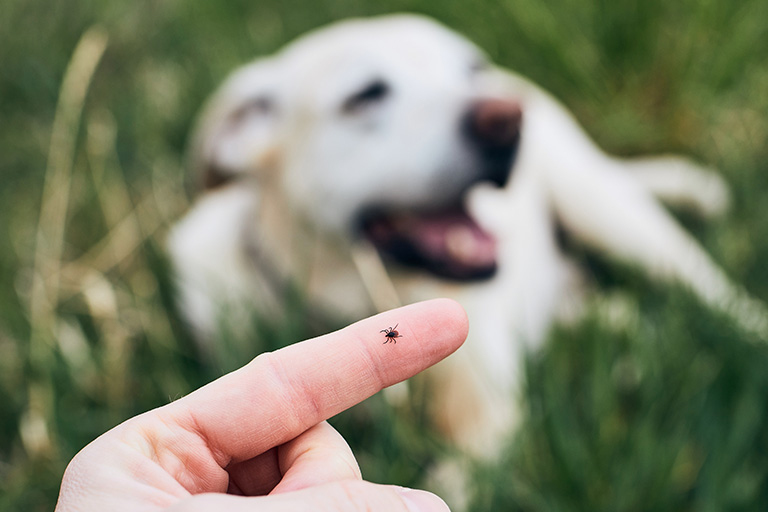
Tick protection for dogs and cats: What you should know
Researchers in western Switzerland see a possible cause for the sharp increase in recent years in changing climatic conditions. These could mean that ticks can spread more easily in Switzerland. Environmental conditions appear to have developed in a way that has become more favourable for ticks, especially at altitudes between 500 and 1,000 metres above sea level.
The overall trend shows an increase in tick bites, but the numbers fluctuate from year to year. The weather has a major impact on tick activity.
Studies show that 10% to 30% of ticks can carry pathogens such as Borrelia, Anaplasma or Babesia. Ticks prefer to stay in undergrowth or on plants along forest edges and paths, but they can also be found in parks, gardens and, of course, meadows – usually up to 1.5 metres above the ground – where they wait for passing people or animals.
Ticks: Small parasites – big danger for dogs and cats
Ticks are not only unpleasant, but can also transmit serious diseases to pets. In Switzerland, certain infections in dogs and cats in particular are among the relevant tick-borne diseases. In cats, anaplasmosis is the main one – other diseases are very rare in them.
- Lyme disease (Lyme disease): This disease is caused by the bacterium Borrelia burgdorferi. Possible symptoms in pets include fever, painful joints and general lethargy.
- Babesiosis: A parasitic infection that attacks red blood cells. Typical signs include anaemia, weakness and fever.
- Anaplasmosis: Caused by Anaplasma phagocytophilum, this infection can lead to loss of appetite, fever and joint problems in animals.
- Ehrlichiosis: A bacterial disease that can affect the body’s immune system. Symptoms include fever, weight loss and a tendency to bleed, among others.
- TBE (tick-borne encephalitis): A viral infection of the central nervous system. However, it occurs only extremely rarely in dogs and cats.
Dogs and cats that spend a lot of time outdoors – especially in forests, meadows or tall grass – have an increased risk of coming into contact with ticks.
Tick-borne diseases in pets in Switzerland
Reliable statistics on tick-borne diseases in dogs and cats in Switzerland are currently not available. However, since pets often use the same habitats as humans – such as forests, meadows or gardens – it can be assumed that they are exposed to a comparable risk and may be affected accordingly.
How to protect your pet from ticks:
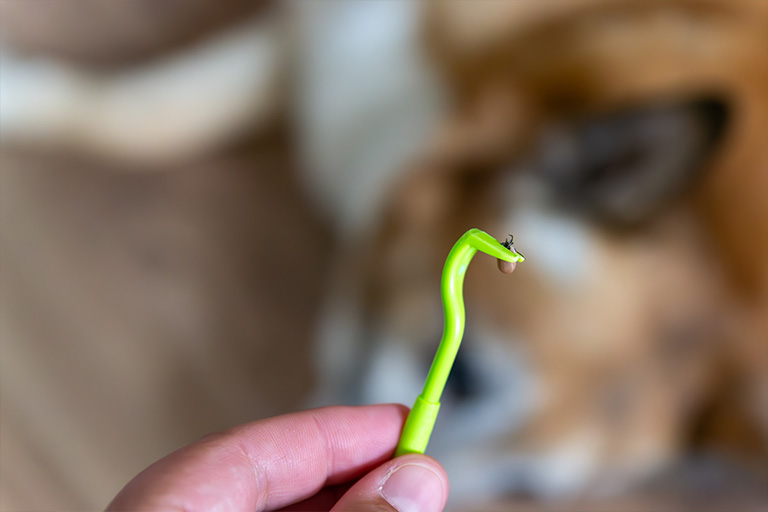
Most diseases transmitted by ticks are only passed on to the animal hours after the bite – usually only after 24 to 36 hours. That’s why it’s important to check your pet carefully for ticks every day. When removing a tick, make sure no part of it, especially the head, remains in the skin to avoid inflammation. In general, dogs are more susceptible to tick-borne diseases than cats. To reduce the risk, consistent tick protection is recommended.
Here are a few tips for tick prevention:
- Regular use of tick preventatives:
There are various products such as spot-on treatments, tick collars, tablets or injections that either repel ticks (repellent) or kill them. Many of these products also protect against other parasites such as fleas and lice and provide protection for several weeks, months or even a whole year. - Daily coat check:
Especially after outings in the forest, meadow or tall grass, you should check your animal thoroughly to spot ticks early. - Remove ticks immediately:
If you find a tick, remove it quickly and carefully using special tick tweezers, a tick card or a tick hook to minimise the risk of disease transmission.

Products for tick protection
There are various ways to protect dogs and cats from ticks. Depending on the species, habitat, age and individual needs, different products are used. That’s why it’s important to consult a veterinarian before use to find the right product for your pet. This ensures optimal protection. Here is an overview of common products that work against ticks:| Type | Advantages | Disadvantages | Use | Mode of action | Animal species |
|---|---|---|---|---|---|
| Tablet (Oral products that work internally) |
|
| Repeat administration required; tablets are available for 1 month or 3 months | Killing | Depending on the product, for dogs and cats |
| Spot-on (Liquid solution applied directly to the skin at the back of the neck.) |
|
| Repeat application required (every 4–6 weeks) | Repellent against ticks and killing depending on the active ingredient | Depending on the product, for dogs and cats |
| Collar (Special collars that slowly release active ingredients) |
|
| Depending on the product, collars are effective for 5–8 months | Repellent against ticks and killing | Depending on the model, for dogs and cats |
| Injection (Injection administered by veterinarians) |
|
| Once a year | Killing | Dog |
Tablet
(Oral products that work internally)
| Advantages |
|
| Disadvantages |
|
| Use | Repeat administration required; tablets are available for 1 month or 3 months |
| Mode of action | Killing |
| Animal species | Depending on the product, for dogs and cats |
Spot-on
(Liquid solution applied directly to the skin at the back of the neck)
| Advantages |
|
| Disadvantages |
|
| Use | Repeat application required (every 4–6 weeks) |
| Mode of action | Repellent against ticks and killing depending on the active ingredient |
| Animal species | Depending on the product, for dogs and cats |
Collar
(Special collars that slowly release active ingredients)
| Advantages |
|
| Disadvantages |
|
| Use | Depending on the product, collars are effective for 5–8 months |
| Mode of action | Repellent against ticks and killing |
| Animal species | Depending on the model, for dogs and cats |
Injection
(Injection administered by veterinarians)
| Advantages |
|
| Disadvantages |
|
| Use | Once a year |
| Mode of action | Killing |
| Animal species | Dog |
Author:

Dr. med. vet. Laura Loi, FVH
Dr. med. vet. Laura Loi is head veterinarian at MeikoVet in Maienfeld.
Author:
Dr. med. vet. Laura Loi, FVH
Dr. med. vet. Laura Loi is head veterinarian at MeikoVet in Maienfeld.