

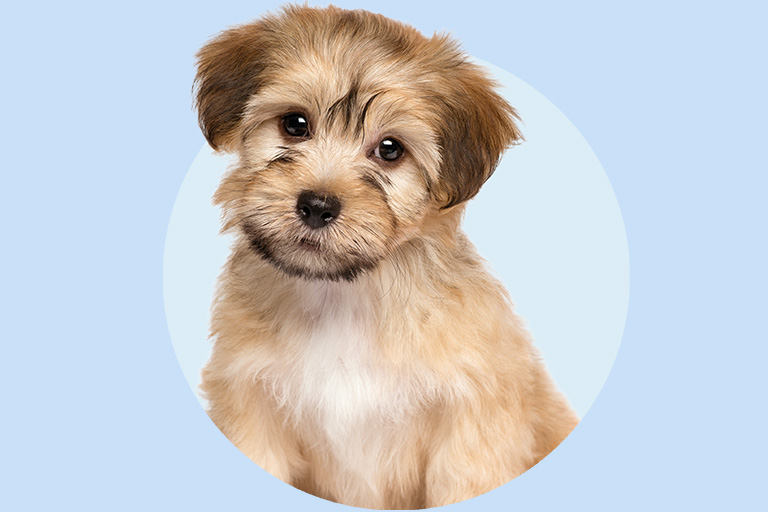
Congratulations on Your Puppy
Guiding Your Puppy Properly:
Tips for Health and Development in the First Year of Life
In the first months of life of a puppy there are es many important topics that are für crucial for their health, development and their well-being entscheidend . In this blog post you will receive you can helpful information and practical tips on how you can optimally support your puppy during this sensitive phase optimal unterstützen .
Fleas and Ticks
Fleas and ticks can not only be unpleasant but also transmit diseases. It is therefore important to start regular flea and tick prevention early. Talk to us to find the right product for your puppy.Fleas:
- Fleas can cause itching, skin irritation, hair loss, and flea bite allergies.
- In cases of heavy infestation, especially in young animals, fatigue, weight loss, and anemia can also occur.
- Fleas can transmit tapeworms.
How to Recognize Fleas on Your Puppy
Fleas are detected by finding the fast-moving parasites in the coat (with the help of a flea comb) or by finding the typical crumbly flea dirt. When dissolved with a drop of water on a white surface (e.g., paper towel), it forms a brownish-red spot.
Treatment of a Flea Infestation
For successful control, the animal must be treated regularly with a flea product, as fleas occur year-round. There are spot-on products, tablets, or collars available. We are happy to advise you on what is optimal for your pet.

Ticks:
- Ticks can transmit dangerous diseases such as Lyme disease or anaplasmosis.
- It is important to check the coat for ticks after walks, especially in wooded and grassy areas.
- Today, various highly effective tick products (tablets, spot-on, collars, or injections) are available.
Removing Ticks from Your Dog:
If a tick has attached itself, it should be removed as quickly as possible. Up to 2 hours after the tick attaches, the risk of transmitting an infectious disease is minimal. To easily remove a tick, every pet owner should have tick tweezers or a tick hook. Afterward, the affected area must be disinfected.
Tick infestation depends heavily on the season. Depending on the species, these bloodsuckers are active year-round, but the main tick season is from March to November. We are happy to advise you on optimal protection.

Vaccinations: A Shield of Protection for Your Puppy
Infectious diseases are a serious threat to your pet. Vaccinations have been proven to provide very good protection for your pet against infectious diseases. Good immunity is achieved when the immune response is properly built up (primary immunization) and then maintained (booster vaccinations).
To ensure the best possible vaccination protection for your puppy, primary immunization should begin at 8 weeks of age. If you have adopted your puppy from a breeder or a responsible private individual, the initial vaccination and microchipping have usually already been completed. Booster vaccinations are given at 12 and 16 weeks of age. At one year, the primary immunization is complete.
The core vaccinations protect your dog against important diseases such as:
- Distemper
- Hepatitis
- Parvovirus
- Leptospirosis
- Kennel Cough
- Rabies (for border crossing)

Rabies Vaccination
For vacations abroad, your pet needs a valid rabies vaccination. The vaccination must be given at least 21 days before crossing the border.
Vaccine Titer Testing in Dogs
Vaccine titer testing in dogs is a blood test that measures the number of antibodies against certain diseases (e.g., parvovirus, distemper, or hepatitis) in the dog’s blood. The test shows whether the dog still has sufficient vaccination protection or whether a booster vaccination is necessary.
Neutering in Dogs – Get Advice
During neutering, the testicles are removed in male animals, and the ovaries (and rarely the uterus) are removed in female animals. Chemical castration (implant) is also possible. In female dogs, this is not recommended due to health risks. In male dogs, chemical castration is a good alternative as an “interim solution” or “to try out,” as there are hardly any health disadvantages.
Advantages and Disadvantages of Neutering
The decision to neuter is an individual consideration in which both advantages and disadvantages must be taken into account. There is no universal answer as to whether neutering makes sense and at what time it should be performed. Every dog is unique, which is why this decision should be made in consultation with the treating veterinarian.
We therefore strongly recommend that you have a detailed consultation with your veterinarian to discuss all factors that are important for your dog and their health. We are happy to provide you with advice on this topic.

Deworming: Protection Against Parasites
Puppies are particularly susceptible to worms, as they can pick up parasites through mother’s milk or contact with infected animals or the environment. Regular deworming is therefore recommended for your pet’s health. Such parasites are freeloaders and take away valuable nutrients and energy from our pets. They burden the organism and reduce resistance to diseases.
Important:
- Puppies should be dewormed starting at 2 weeks of age.
- Repeat deworming every 2 weeks until weaning from mother’s milk. After that, deworm monthly until 6 months of age.
- Then deworm at regular intervals (4 times a year).
- Talk to us about an individual deworming program, as the frequency of deworming also depends on the level of infection pressure (risk of infection).
Dental Care: Healthy Teeth for a Long Life
Dental care is an often overlooked but very important component of your dog’s health. Dental problems can lead to serious health issues. That’s why it’s important—just as with us humans—to keep our puppies’ teeth healthy and clean from an early age.
Important:
- Establish a dental care routine with your puppy early on.
- Regular tooth brushing with a special dog toothbrush and toothpaste.
- Give your puppy special chew items that clean the teeth.
Pet Insurance: Security for Your Puppy
Pet insurance is a sensible safeguard against unexpected veterinary costs. There are different types of insurance that offer different benefits:
Health Insurance:
Covers costs for necessary treatments, surgeries, and medications.
Accident Insurance:
Specifically covers costs in case of accidents.
Tip: We recommend taking care of insurance in good time to be financially protected in case of an emergency. Compare different insurance providers and choose the right plan for your puppy.
Toxic Foods and Plants: Danger in the Home and Garden
There are many foods that are toxic to our dogs and are commonly found in our households. These can cause serious health problems.
These include, for example:
- Chocolate
- Grapes and Raisins
- Alcohol
- Coffee
- Xylitol (a sugar substitute)
This list is not exhaustive.
Important:
Store these foods safely and away from your dog and make sure they don’t eat leftovers or scraps.
Houseplants and garden plants can also be dangerous for dogs.
Common toxic plants include: oleander, ivy, azaleas, lilies, orchids, or poinsettias.
Tip: Learn about the plants in your home and garden and make sure your dog has no access to them.
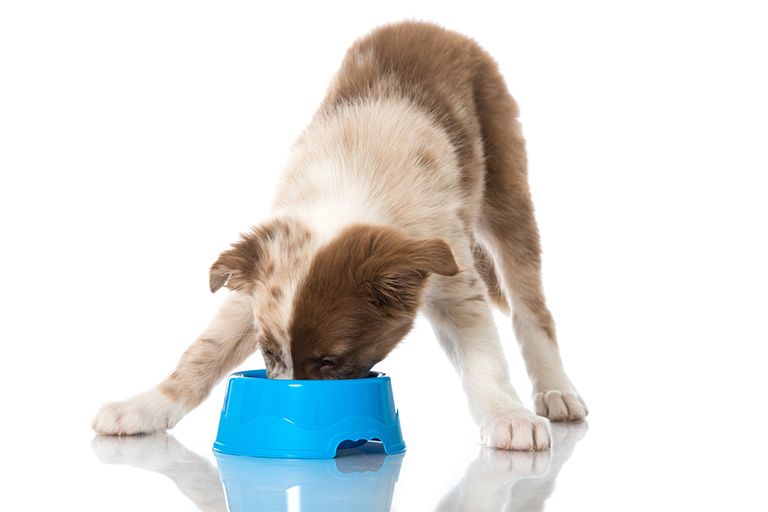
The Right Nutrition for Puppies
It is important to feed puppies age-appropriately, as their bodies are in a growth phase and require special nutrients to grow up healthy and
strong. Puppies have higher energy needs than adult dogs, and their bones, muscles, organs, and immune systems are still developing. A balanced diet tailored to the needs of puppies is crucial for healthy development.
The following points should be considered when feeding puppies:
- Special puppy food: Contains the right nutrients for growth.
- Portion size: Several small meals per day instead of fewer large ones.
- Calcium-phosphorus ratio: A balanced ratio is important for bone development.
- Fresh water: Always provide sufficient amounts.
- Gradual transition: Food changes should be made gradually to avoid digestive problems.
With age-appropriate nutrition, you lay the foundation for your pet’s long-term health. If you have questions about nutrition, we are happy to help.
Author:

Dr. med. vet. Laura Loi, FVH
Dr. med. vet. Laura Loi is head veterinarian at MeikoVet in Maienfeld.
Author:
Dr. med. vet. Laura Loi, FVH
Dr. med. vet. Laura Loi is head veterinarian at MeikoVet in Maienfeld.