VetTalk: Fear of fireworks
Tierische Panik: Feuerwerksangst bei Hunden und Katzen
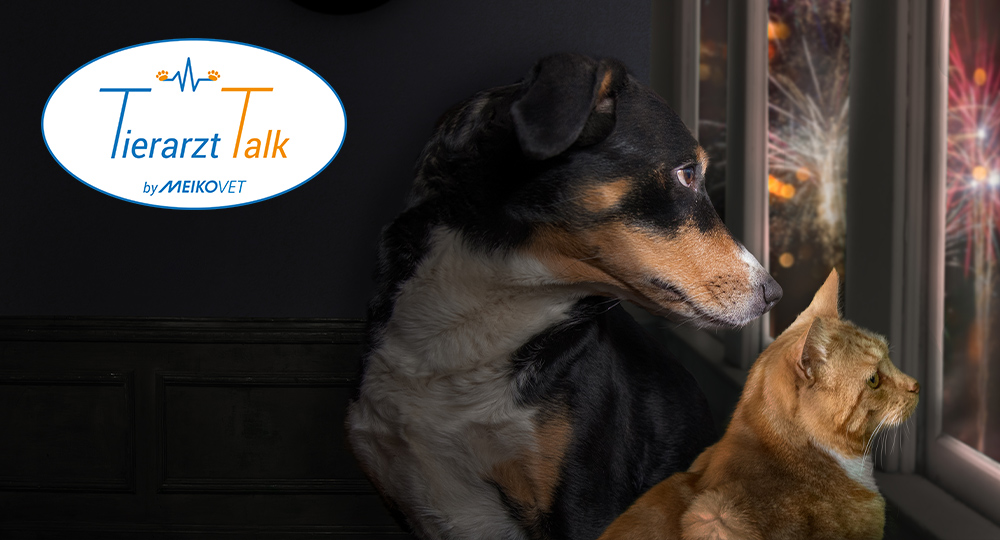
In the latest VetTalk, the head veterinarian of the MeikoVet small animal practice in St. Gallen, Dr. med. vet. Julia Rettberg, talks about the many stimuli that affect our pets during an impressive fireworks display. How fear of fireworks manifests in our four-legged friends and what pet owners should never do to calm the animal.
Why are dogs and cats afraid of fireworks?
Basically, not all dogs and cats are afraid of fireworks. Animals can react differently to fireworks. They do not associate the loud, banging noises with any tangible danger that they would either face or flee from if they feel inferior. The bright flashes of light are not necessarily associated with the whistling and thundering, but can further unsettle the animal as they are equally unable to categorize them.
How does fear manifest in our pets?
At the first bang, the dog may be startled and duck, while the cat may jump in fright and try to hide from the danger. The next reaction depends on the animal’s self-assessment and previous experiences. An animal that is afraid of fireworks freezes and concentrates all its senses on the perceived danger: the eyes are wide open so that no movement indicating a suspected attacker is overlooked. The ears are pricked and the muscles are tensed so that the body is prepared for a fight or flight. The high adrenaline level causes muscle tremors.
“Service dogs, such as German and Belgian Shepherds, are bred for gun-dog stability, so to speak.”
Dr. med. vet. Julia Rettberg, Head Veterinarian
Can chronic symptoms occur?
A distinction must be made here between whether a dog is generally anxious or whether it is afraid of a stimulus (in this case caused by fireworks). Anxiety can significantly impair the dog’s daily life, as it feels paralyzed and can disrupt or even make normal interactions with other dogs and its caregivers impossible. Fear of the event, on the other hand, only occurs as long as the stimuli the dog is afraid of persist. Therefore, fear of fireworks cannot become chronic, but it can recur.
Beeinflussen genetische Faktoren das Angstverhalten eines Hundes?
Genetic factors have a significant influence on how a dog deals with threatening stimuli or even dangerous situations. Service dogs, such as German and Belgian Shepherds, are therefore bred for gun-dog stability, so to speak. If the female dog is very confident and relaxed, she will pass this trait on to her puppies to some extent through her genes. If the puppies already have experience with loud noises in the first few weeks, they will look to their mother and adopt her behavior.
Wie kann der Hund und die Katze beruhigt werden, wenn sie Angst haben?
Dogs need a confident, calm handler. To be able to calm a dog, we must remain calm ourselves and signal to the dog that we have the situation under control and classify it as harmless. Under no circumstances should we reinforce the dog’s behavior at the wrong moment. In this case, it is advisable to consult a dog trainer.
Cats are different here. Hiding places offer the cat a sense of security; particularly thick, sound-absorbing blankets placed over chairs and sofas can help if the cat is afraid. Under no circumstances should the cat be dragged out of its hiding place and picked up. It is not uncommon for cat owners to be injured by their own cat in such situations because it wants to break free from the grip and flee in a panic.
Can medication be used?
There are a number of medications that are said to have a calming effect. There are now many herbal products that contain, for example, green tea extract, amino acids (such as L-tryptophan) and vitamins, but in some cases also CBD (cannabidiol).
For cats, there are pheromone-containing preparations in the form of sprays and diffusers. These can be used at home near sleeping areas or sprayed into the cat carrier.
Strongly sedative medications that put a strain on the circulatory system should be avoided. Some so-called tranquilizers do not change the perception of the frightening stimuli, but only impair the ability to react to them. To the pet owner, the animal appears calm, although in reality it has a very high stress level because it cannot run away even though it is very afraid.
At what point is it an anxiety disorder that needs professional treatment?
Dogs from abroad or rescued animals from poor housing conditions can exhibit severe behavioral problems if the early socialization phase did not go optimally. These should always be addressed in cooperation with an animal trainer. There are also veterinarians who specialize in behavioral therapy and use psychotropic drugs on animals.
“Strongly sedative medications that put a strain on the circulatory system should be avoided.”
Dr. med. vet. Julia Rettberg, Head Veterinarian
Can a cat or dog be desensitized?
With patient handling and consistent training, dogs and cats can be desensitized by linking the stimulus with a new experience. This requires skill in reading the animals on the one hand and good timing on the other. If the animal is reinforced at the wrong moment, this can even intensify the unwanted behavior.
Dogs that are gradually and carefully accustomed to loud noises find fireworks less threatening than animals that are left to their own devices and have to decide how to deal with the invisible danger.
Are noises louder for dogs than for humans?
There are noises in frequency ranges that a dog hears better than a human. The human ear is most sensitive to frequencies in the middle range, while dogs can perceive much higher frequencies than humans. However, the noise itself is not necessarily perceived as louder by dogs.
Do cats hear better than we humans?
Like dogs, cats can perceive higher frequencies than humans. They have a wider frequency range and therefore perceive more sounds than humans.
Can hearing tests be performed on animals?
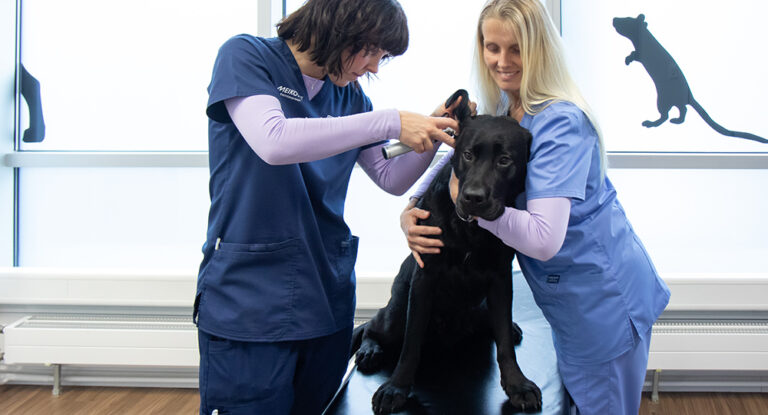
Since animals cannot tell us when they hear a sound, we have to rely on the animal’s reactions on the one hand, and on the other hand, electrical impulses in the brain can be measured and recorded using electrodes and appropriate devices. This allows the question of hearing ability to be answered with “yes” or “no” for white cats with blue eyes, for example, where deafness can occur genetically.
What can be done for dogs that can no longer hear well?
Our body language can help the dog understand us even without commands. Researchers suspect that we unconsciously send many signals to the dog anyway, from which it can read our mood. By training our dogs from puppyhood to look at us and orient themselves towards us, this becomes routine and makes daily life with an old, hard-of-hearing dog easier later on. Nevertheless, the dog should be kept on a leash in dangerous situations if its perception of its surroundings is limited.
“There are noises in frequency ranges
that a dog hears better than a human.“
Dr. med. vet. Julia Rettberg, Head Veterinarian
Author:
Dr. med. vet. Julia Rettberg
Dr. med. vet. Julia Rettberg is the head veterinarian at MeikoVet in St. Gallen and an accredited veterinary ophthalmologist. She received the General Practitioner Certificate in Ophthalmology from the International School of Veterinary Postgraduate Studies (ISVPS).
Author:
Dr. med. vet. Julia Rettberg
Dr. med. vet. Julia Rettberg is the head veterinarian at MeikoVet in St. Gallen and an accredited veterinary ophthalmologist. She received the General Practitioner Certificate in Ophthalmology from the International School of Veterinary Postgraduate Studies (ISVPS).